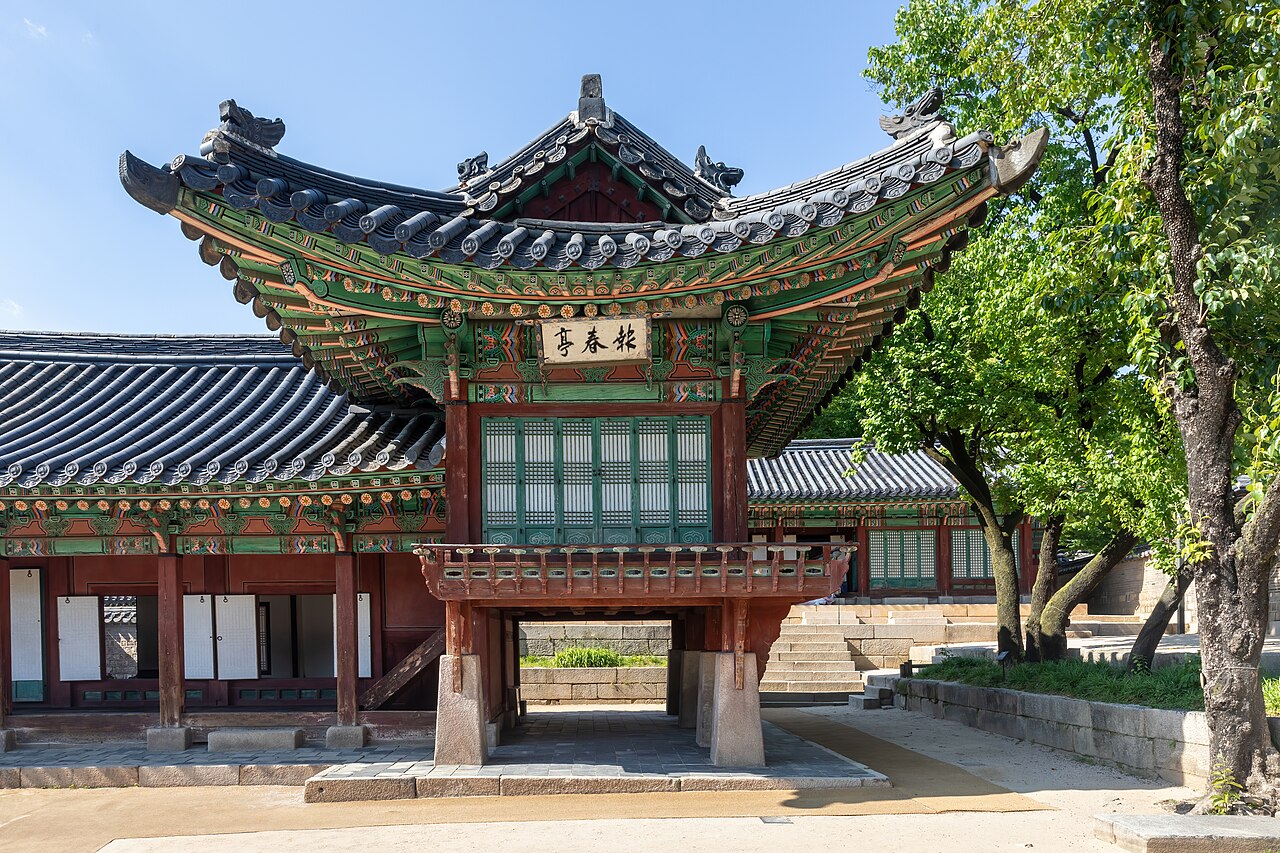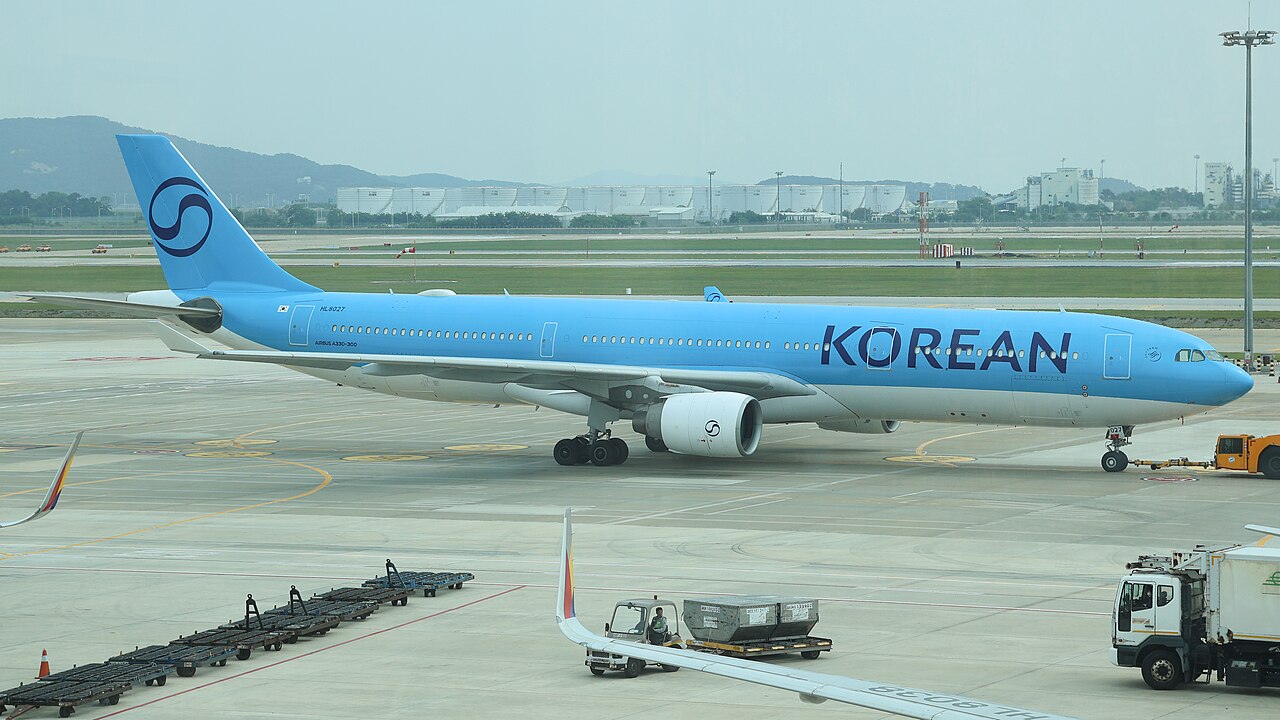
(KOR-Incheon) Korean Air Airbus A330-323 HL8027 @ RKSI 2026-06-04.jpg · S5A-0043 · CC BY 4.0 · Image details
Plan the first night and flight home before filling the days
Start with entry requirements, local flight dates and accommodation nights. Then secure the journeys and reservations your trip depends on. Finish with a phone, payment and airport plan you can use even when tired or offline.
Use this guide to create the decisions and records below, then track them in the printable Korea trip checklist. A tick records your progress; it does not confirm a booking or entry eligibility. For a sightseeing route after the essentials are settled, use the Seoul five-day plan.
The sequence and examples are our planning recommendations. Official entry and airport information was checked on October 11, 2026; this is not a personally tested trip, visa assessment or foreign-card checkout test.
Work through these stages in order
| Stage | Action | Finished when you have… |
|---|---|---|
| Before nonrefundable bookings | Check each person’s entry requirements | A document task list with official links |
| Once flights are known | Count nights and choose cities | A night-by-night hotel list in Korean local dates |
| Before arranging sightseeing | Secure essential transport and limited-entry visits | Confirmed bookings, or dated sales reminders |
| Before leaving home | Prepare phone, money and the hotel journey | Saved records, a main route and a funded fallback |
| Within the declaration window | Submit an arrival declaration if required | Confirmation, current terminals and check-in instructions |
| Before flying home | Work backward from airline guidance | Hotel departure time and luggage pickup plan |
1. Separate visa, K-ETA and arrival-declaration checks
Check every traveler individually, including children and people with different passports. Start with the Korea Visa Portal and the Korean embassy or consulate responsible for your application. Its Visa Navigator asks about nationality, visit purpose and length of stay. Do not assume that a tourism rule also covers work, study or another purpose.
Then resolve three separate questions:
- Do I need a visa? Establish the applicable entry route before buying bookings you cannot change. A declaration form does not replace a required visa.
- If traveling without a visa, does K-ETA apply? Use the official K-ETA service and its current notices. The temporary exemption notice extends the exemption for the countries and regions already covered through December 31, 2026, Korea time. It is not an exemption for every passport. Check again for travel in 2027; this notice does not establish next year’s rules.
- Do I need an e-Arrival Card? Use the official navigator. Its eligibility guide lists K-ETA holders among those excluded from declaring, while K-ETA-exempt travelers are among those generally required to declare. If you hold K-ETA but enter using a visa, the guide says you must still complete the e-Arrival Card. Holding an applicable exemption and holding a valid K-ETA are different situations; other exclusions also exist.
When required, the e-Arrival Card is free and submitted within three days before arrival in Korea. Have your passport, travel details, Korean accommodation address and email ready. Follow the dates the official site allows, check the entries before submitting, and save its confirmation PDF or email. A completed form is not a guarantee of admission. Official submission instructions
Save: each person’s required action and confirmation in a secure personal record. Keep passport scans out of a publicly shared itinerary; this site’s checklist does not need them.
2. Count hotel nights, including the night you arrive after midnight
Put arrival and departure dates into the trip pace planner, using the dates shown locally in Korea. Deduct time for airport travel and each city change before deciding how many full sightseeing days you have. Its result uses your assumptions, not live flight or train times.
For each hotel, check the exact branch, address, check-in hours and cancellation deadline. Ask whether it can receive you at your expected arrival time and store bags before check-in or after checkout. Storage and early room access are separate requests; neither should be assumed.
Worked example: Thursday arrival, Monday departure. Two adults land at Incheon at 21:30 on Thursday and choose one Seoul base. They expect that reaching the hotel could take them past midnight. They want the room available as soon as they arrive, so they arrange the Thursday night and obtain the property’s written late-arrival instructions; booking only from Friday could leave them waiting until Friday’s check-in time. Thursday through Sunday is four nights, with three full days on Friday, Saturday and Sunday. Monday’s usable time depends on the flight home. These are illustrative dates and flight times, not a transfer-time prediction.
For that short trip, compare a Seoul stay against the extra packing and hotel transfers of adding another city. Use choosing a Seoul base for neighborhood tradeoffs or Seoul and Busan in seven days to understand the transfer cost in time.
Save: one row per night, plus the hotel’s Korean address, contact number, entrance instructions and agreed late-arrival procedure.
3. Reserve the trip’s fixed points, then add flexible days
List the things whose absence would change the trip: perhaps an intercity journey, performance or guided session. Check these before arranging the surrounding day.
| Your plan depends on… | Next action | What counts as ready |
|---|---|---|
| An intercity train | Follow the KTX booking steps and current KORAIL notices | Exact station, date, departure, ticket and retrieval method |
| A Secret Garden visit | Check the Changdeokgung guide | Correct product, language, entry time and meeting point |
| A performance or exhibition | Read the ticket and identity guide | Correct event/date, required ID and entry instructions |
| A museum visit with children | Check the National Museum guide for the specific facility | Any required session booking covers the whole party |
If sales are not open, write “not booked — check on [date]”, with the operator link and an alternative. A card-payment alert alone is not confirmation of a ticket. If a payment screen fails, inspect the booking record and payment status before trying again. Do not build another nonrefundable commitment around an unconfirmed reservation.
Use the reservation priority guide to sort the rest. Place confirmed sessions first, check closing-day exceptions, and keep a nearby rain alternative. You can then move flexible sightseeing without losing a booking.
4. Prepare a phone and payment plan that can fail safely
Before buying roaming, a SIM or an eSIM, check compatibility and any unlock requirement with your provider. Confirm whether it includes only data or also the calls/SMS you need, when its validity starts, and how support works if activation fails. Keep access to the authentication method your bank or booking service uses.
Set up NAVER Map, a translation app and your chosen taxi app before departure. Search for the exact hotel branch, save it, and try finding the route from your terminal. The KTO app directory links official downloads; our app setup guide explains the steps. Saving a place does not promise that its map or live directions will work offline. Save the Korean address and essential instructions separately, then check those files in airplane mode.
For money, prepare your intended payment method and a separate fallback. Check overseas-use settings, authentication access and withdrawal fees with your issuer. Choose transport credit you can actually fund: the KTO payment guide distinguishes ordinary physical Tmoney cash top-ups from foreign-card-supported ticket machines. Do not assume that tapping a foreign bank card will open a subway gate. See the transport-card comparison before loading money.
Save: provider support details, the hotel’s Korean address, essential tickets, issuer contact information and the chosen taxi payment fallback. Keep a charged phone and an accessible charger; do not put every useful record behind a fresh login.
5. Write your airport-to-hotel route as actual steps
Confirm the terminal for the operating flight, checking both your booking and current flight information. Incheon Airport warns that codeshares and airline circumstances can affect the actual terminal. Arrival and departure terminals need separate checks. Airport terminal guidance
For the main route, save these five details:
- Terminal and the train station, ticket counter or bus stop you need.
- Service and destination direction, with the appropriate ticket or payment method.
- Where to get off and any onward transfer.
- Final walk to the exact hotel entrance, including a manageable route for your bags.
- The last useful connection if arrival is delayed, followed by a fallback that still reaches the hotel.
Start with Incheon to Seoul; use the more specific Myeongdong or Gangnam comparison when relevant. Compare the whole journey with luggage, not only the advertised train ride.
For a late arrival, read night buses and the first hotel night. The airport publishes separate Terminal 1 and Terminal 2 night-bus schedules. Check your terminal and the final journey from the bus stop. Landing before a last departure does not establish that you can board it after immigration and baggage collection.
If you miss the route you saved, check the next workable service before leaving the terminal. If none fits, use the taxi or accommodation alternative you budgeted for and contact the hotel about the delay. A night bus into Seoul helps only if its drop-off gives you a workable final connection.
6. Work backward for departure, including retrieving your bags
Use the airline’s current airport-arrival recommendation and check-in/bag-drop deadlines. Subtract the hotel-to-correct-terminal journey, a delay allowance, and any time to return for stored luggage. Increase the allowance for assistance needs, an unfamiliar route or airport tasks; a map’s moving time is only one part of the calculation.
For the illustrative Monday flight at 18:00, suppose the traveler chooses a 15:00 terminal target after checking airline guidance. If their own door-to-terminal estimate is 90 minutes, plus a 30-minute contingency, they leave the hotel by 13:00. If bags are stored at the hotel, sightseeing must end early enough to return and collect them before 13:00. The three-hour target and 90-minute route are example inputs, not universal advice or a measured journey.
For purchases still needing airport tax-refund export checks, keep the goods and documents available. Incheon Airport instructs travelers with such goods in checked baggage to tell airline staff and complete the required validation/inspection sequence before final bag handover. Use the checked-luggage tax-refund guide to plan that sequence; do not discover it after your bag has gone. Airport refund instructions
Your trip is ready when these records are usable
Keep a compact travel record with entry actions, flights and terminals, every hotel night, issued tickets, the arrival route and fallback, and your airport departure time. Make sure a companion can find shared logistics without exposing passports or account passwords.
Open the trip checklist and tick the decisions you have completed. Print a backup or use its optional device saving; saved progress stays in that browser and does not synchronize to another phone. Give each unresolved item a next action and a check date, so you know what remains before leaving home.
Sources & further checks
- Ministry of Justice — Korea Visa Portal and Visa Navigator
- Ministry of Justice — K-ETA temporary exemption through 2026
- Ministry of Justice — official e-Arrival Card
- Ministry of Justice — who must submit an arrival declaration
- Ministry of Justice — e-Arrival Card submission and confirmation
- Incheon Airport — departure procedures and terminal checks
- Incheon Airport — Terminal 1 late-night buses
- Incheon Airport — Terminal 2 late-night buses
- Korea Tourism Organization — transport payment methods
- Korea Tourism Organization — helpful apps and resources
- Incheon Airport — tax refund and checked baggage sequence
Official-source research does not imply that we visited the location or completed a purchase. Read our research approach.
General travel information, not financial, legal or immigration advice. Prices, rules and availability may change.