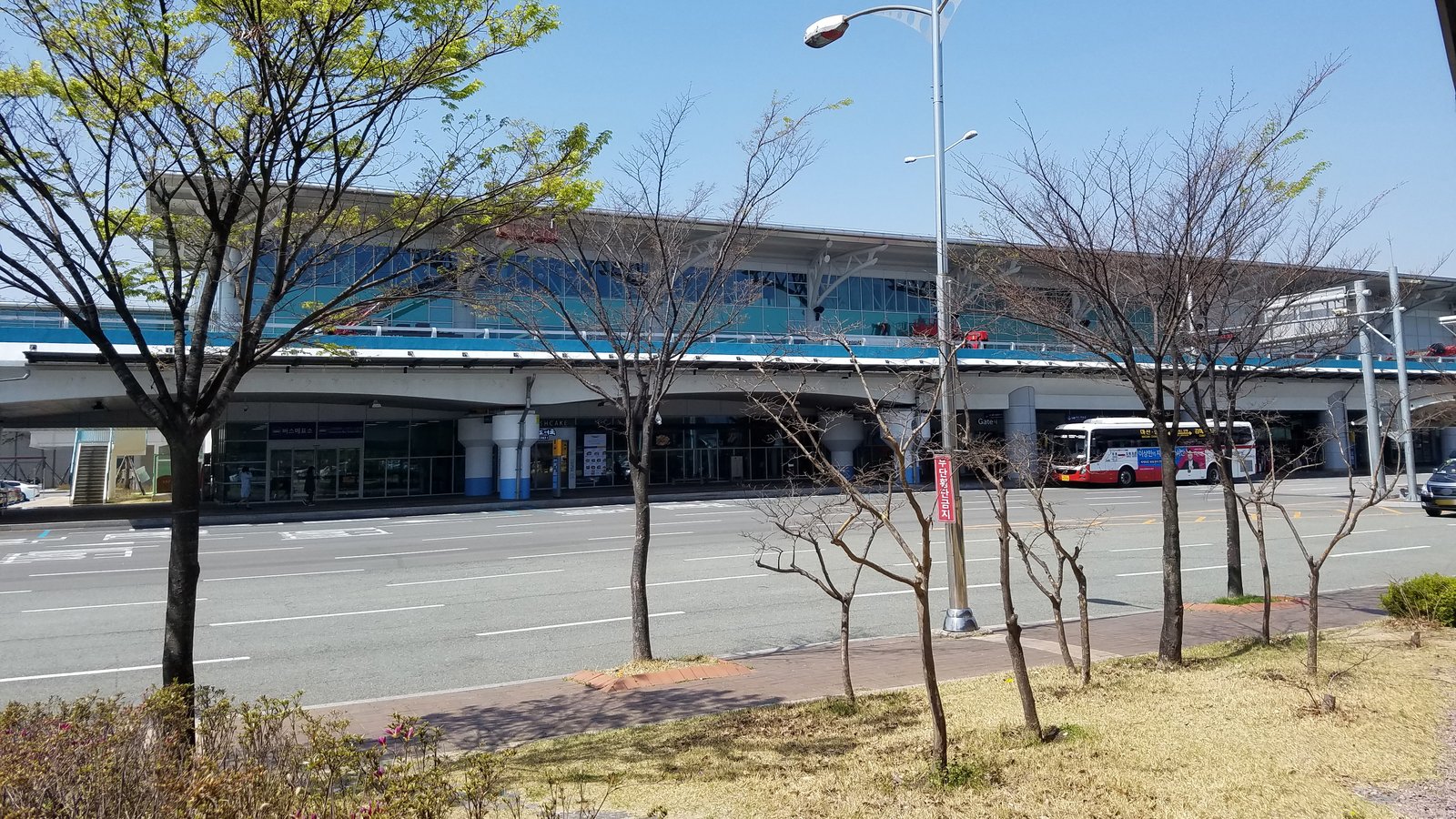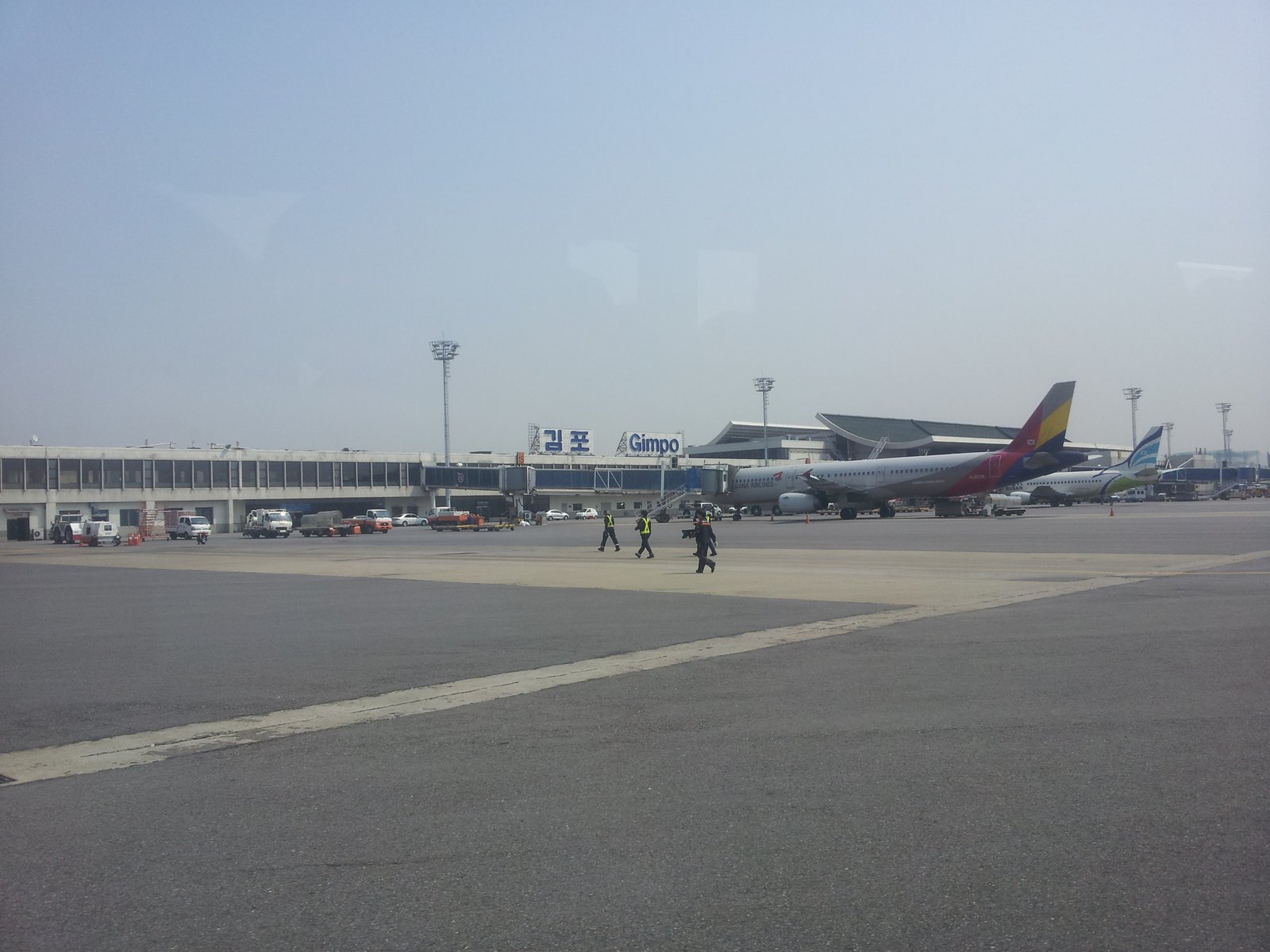
Q482493 Gimpo Airport A05.jpg · revi · CC BY 2.0 kr · Image details
For an Incheon–Gimpo airport transfer by rail, choose AREX All-Stop. Express does not stop at Gimpo. Before booking the onward flight, check both airport codes: ICN means Incheon; GMP means Gimpo. Changing airports is a ground journey, not a walk to another departure gate.
This guide is for passengers whose itinerary actually changes between ICN and GMP. For a hotel-bound arrival, use our Incheon-to-Seoul guide. For a connection staying at Incheon, follow your airline’s transfer instructions instead.
Before buying an airport-change itinerary, confirm that you can enter Korea with your passport and travel documents. This is a landside transfer: Korean Air’s ICN–GMP international-connection instructions include immigration, baggage claim and Customs before ground transport. Check your circumstances with the operating airline and the official Korea Visa Portal; an onward ticket alone is not proof of entry eligibility.
Make the airport decision before the transport decision
| What your booking says | Start here | What to confirm |
|---|---|---|
| Arrive ICN, depart GMP | Plan the ground transfer to Gimpo | Arrival terminal, next flight’s domestic/international terminal, baggage and check-in cutoff |
| Arrive GMP, depart ICN | Plan the ground transfer to Incheon | The next airline’s confirmed T1 or T2 departure terminal |
| Arrive ICN, depart ICN | Check the airline’s Incheon transfer procedure | Whether you stay airside; do not leave simply to follow this guide |
| Separate tickets with little spare time | Reconsider the connection before purchase | Rebooking conditions and a later flight or overnight alternative |
Save the onward flight number and terminal as well as its departure time. A map destination called “Gimpo Airport” is not confirmation that you have reached the correct check-in area.
Take All-Stop; skip the Express purchase
The AREX operator’s route list includes Gimpo Airport on All-Stop between the Incheon terminals and Seoul. Its Express service connects Seoul Station with Incheon T1 and T2, skipping Gimpo. There is no need to travel to central Seoul to change trains for this airport pair.
For Incheon to Gimpo:
- Complete your arrival procedures and collect the bags your airline tells you to reclaim.
- Follow the airport railway signs and select All-Stop, with Gimpo Airport as your destination.
- Check the platform display for travel toward Seoul and confirm Gimpo Airport is on the stopping list.
- Get off at Gimpo Airport / 김포공항. Follow signs for the domestic or international terminal named on your onward booking, then your airline’s check-in area.
For Gimpo to Incheon, choose All-Stop in the airport-bound direction. Confirm that the displayed service reaches your required Incheon Airport T1 or T2 stop before boarding; do not use the first train’s destination name as a substitute for checking. After arrival, follow the signs to departures and your airline counter.
AREX lists station machines for single-journey tickets and prepaid transit cards as All-Stop ticket options. Use the fare shown for your actual terminal–Gimpo journey; a Seoul Station Express fare is a different purchase. See our transport-card guide if you are deciding whether to buy a reusable card. Check current departures at the station, especially early or late in the day.
Work backward from check-in, not takeoff
A train ride is only one part of the connection. Write down this sequence before choosing a flight:
Arrival procedures and bags → walk to transport → wait and ride → walk to the correct terminal/counter → check-in and bag drop → security and boarding.
For example, Korean Air’s airport-counter guidance for Korean Air-operated flights says domestic check-in closes 30 minutes before departure and international check-in one hour before departure. These are that airline’s cutoffs, not a recommended airport arrival time or a rule for every carrier. Confirm your own airline’s current check-in, bag-drop and boarding deadlines. Arriving at the railway station at the cutoff leaves no time to reach the counter.
An illustrative calculation: if your domestic flight departs at 15:00 and your airline confirms a 14:30 check-in cutoff, use 14:30 as a deadline you must beat, not the time to leave Incheon. Subtract counter walking, travel and waiting time, then allow room for unpredictable arrival queues and delays. This example does not establish that any particular incoming flight makes the connection.
When the only workable plan depends on immediate baggage delivery, no queue and a train arriving just as you reach the platform, choose a later onward flight or an overnight break. Before buying separate tickets, read the change and missed-flight conditions of each booking rather than assuming the second airline will move you free of charge.
Baggage must be part of the plan
Korean Air’s ICN–GMP transfer instructions tell passengers to collect baggage, travel to the other airport and check it in again. Confirm arrangements with your operating airline; do not assume a checked bag moves between the airports on your behalf.
The same airline describes a different process for designated transit-exclusive domestic flights at Incheon. Those passengers follow transfer instructions and must not treat the journey as a Gimpo airport change. If your itinerary is unclear, show both flight numbers to the airline before leaving the transfer area.
Keep the onward booking and documents accessible while carrying your bags. If stairs, long passages or several suitcases make rail difficult, ask airport staff about the usable lift route and compare a road transfer before entering the station.
When a bus or taxi makes more sense
Incheon Airport lists rail, airport buses and taxis as options between the airports. Compare the full journey to the correct terminal, including the next departure and road traffic, rather than choosing on a broad advertised ride time.
For a bus, confirm that its current route serves both your boarding terminal and your destination terminal, then check the departure, bay, fare and luggage conditions at the official airport transport desk or operator. Do not board a Seoul-bound service simply because its sign includes “airport.”
For a taxi, use the designated airport queue and show the destination airport, terminal and flight details. Confirm luggage capacity and the fare basis, including tolls, before departure. A road journey can remove station walking; it cannot guarantee a tight flight connection or remove airline deadlines. For booking and fare terminology, see our taxi guide.
If transport has stopped or the flight is no longer realistically reachable, contact the airline about the booking and arrange a workable later departure or overnight stay. Do not keep following a route whose timing no longer meets your airline’s deadline.
Sources checked October 25, 2026. These are operator-based planning steps, not a timed field test or an airline-approved minimum connection. Recheck the flight terminals, operating service and airline deadlines for your travel day.
Sources & further checks
- AREX: All-Stop service and route
- AREX: Express service
- Korean Air: Airport counter check-in
- Korean Air: Domestic and international connections
- Incheon Airport: Connection to Gimpo
- Korean Air: International connections between Incheon and Gimpo
- Korea Visa Portal
Official-source research does not imply that we visited the location or completed a purchase. Read our research approach.
General travel information, not financial, legal or immigration advice. Prices, rules and availability may change.